Complete cat food and complete dog food: what "complete" means on the label, and how to read the rest
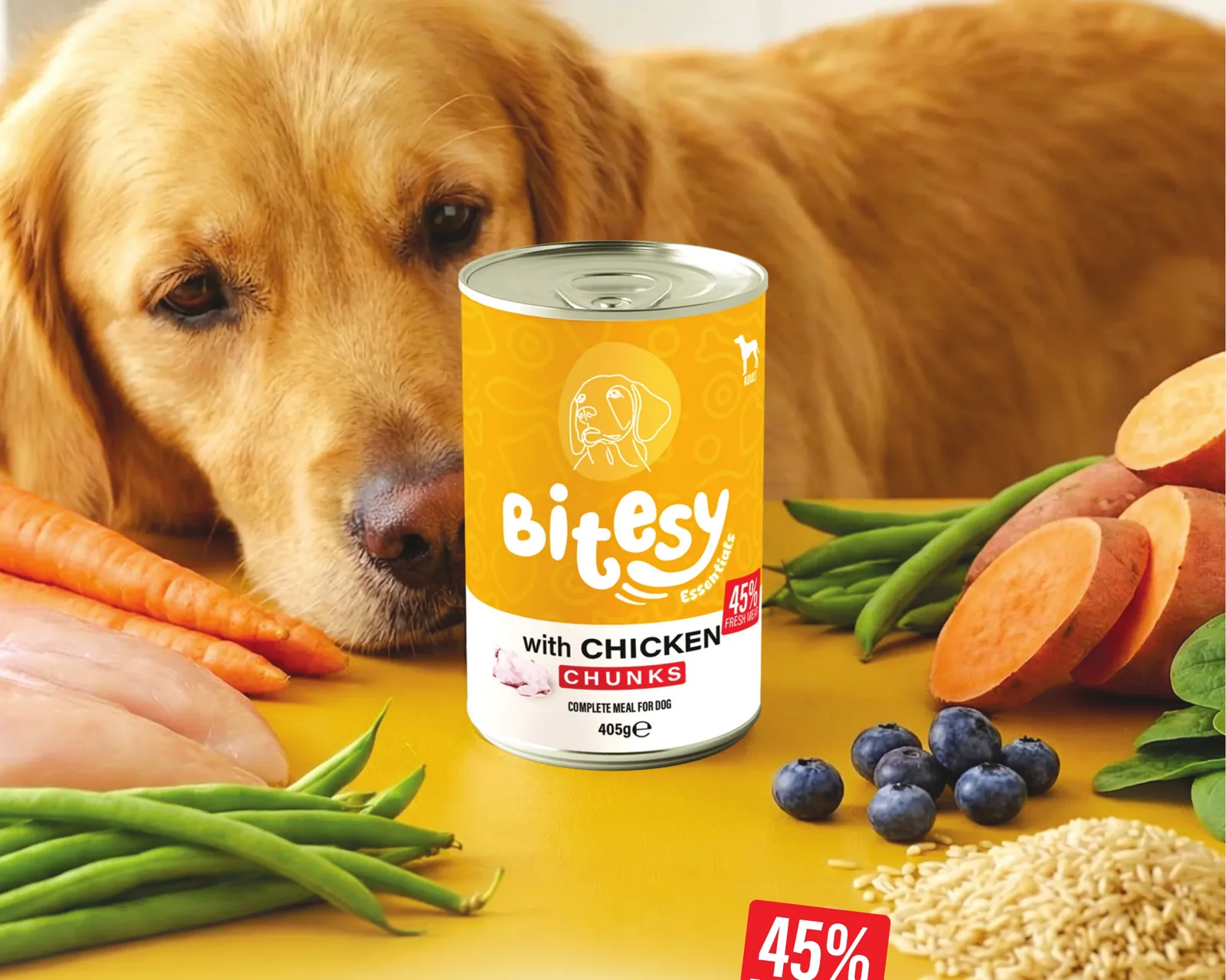
Whether you are choosing a complete cat food or a complete dog food, pet food labels in the EU follow strict rules, which is good news: once you know where to look, the label tells you more than the advertising ever will. Five lines matter. Here is what each one means, and what Bitesy prints on every pack.
1. Complete or complementary
By law every pet food must say which it is. A complete food provides all the nutrients a dog or cat needs in the right proportions, so it can be fed on its own for life. A complementary food does not, and is meant to be fed alongside something else: treats, toppers, some pouches and most raw mixes fall into this group. This is the first word to check, and it is why every Bitesy Essentials recipe, dry and wet, is formulated and labelled as complete.
2. Composition
Ingredients are listed by weight, heaviest first, so the first three tell you what the food is mostly made of. Two things separate a good label from a vague one. First, whether the animal ingredient is named ("chicken", "salmon") or generic ("meat and animal derivatives"). Second, whether a percentage is given. EU rules only require the percentage of an ingredient that is highlighted on the front, so a food that says "with chicken" need only contain 4% chicken. Bitesy names the source and prints the percentage: our wet recipes for dogs and cats start with 45% fresh meat or fish.
3. Analytical constituents
This is the guaranteed analysis: protein, fat, crude fibre, crude ash and, for wet food, moisture. Compare like with like. A wet food showing 8% protein is not weaker than a dry food showing 30%; the wet food is 80% water. Convert to dry matter (divide by the non-water fraction) and the wet food is often the richer of the two.
4. Additives
Nutritional additives are the vitamins, minerals and amino acids added to make a recipe complete: vitamins A, D3 and E, taurine for cats, trace minerals. They are listed per kilogram and are the sign that the manufacturer has formulated the food to a standard rather than simply mixed ingredients. Technological additives cover preservatives and antioxidants; look for named natural ones such as tocopherols.
5. The feeding guide and the batch code
The feeding table is specific to the recipe and is the right starting point for portion size. The batch code and best-before date tell you the food is traceable, which matters if you ever need to report a problem. Every Bitesy product is produced to our specifications under European food-safety standards and carries full batch traceability.
Why we publish everything
Most brands print the label and stop. Bitesy publishes the full composition, analytical constituents and additives of every recipe on this website, so you can read it before you buy, compare it with what you feed now and show it to your vet. If a claim is worth making on the front of the pack, it is worth backing up on the back.
Frequently asked
Is "grain-free" a guarantee of quality?
No. It describes what is absent, not what is present. Judge a food by its named animal ingredients and their percentages.
What does "with" mean on the front of a pack?
Under EU rules, "with chicken" requires a minimum of 4% chicken; "chicken flavour" may contain less than 4%; "rich in chicken" at least 14%; a name like "Chicken dinner" at least 26%.
Where can I see the full composition of Bitesy products?
On every product page of this site, under "Full nutritional info", and in the downloadable catalogue for each range.
More from the blog
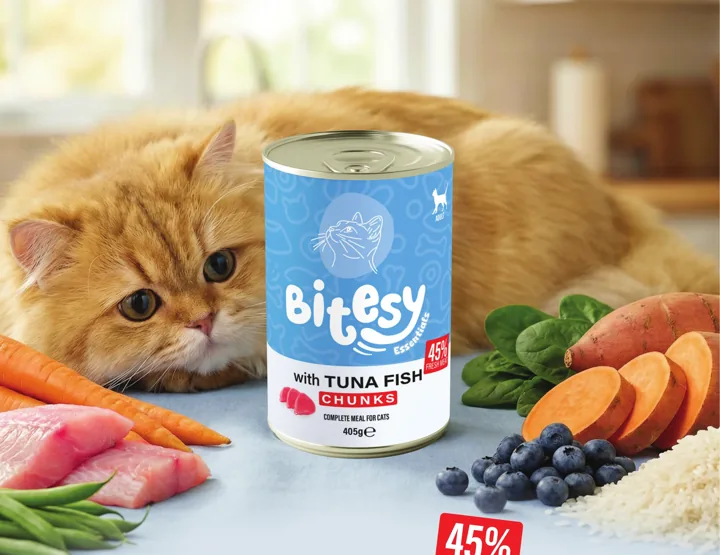
Is wet food better for cats? Wet vs dry, how to combine them, and why water is the real question
Is wet food better for cats than dry? A plain guide to what each does well, why hydration matters so much for cats, and how to mix wet and dry without overfeeding.

Mono-protein cat food: what it is, and which cats really need it
Mono-protein (single-protein) cat food explained: what it means, why it helps cats with food sensitivities and itchy skin, and how to use it in an elimination diet.
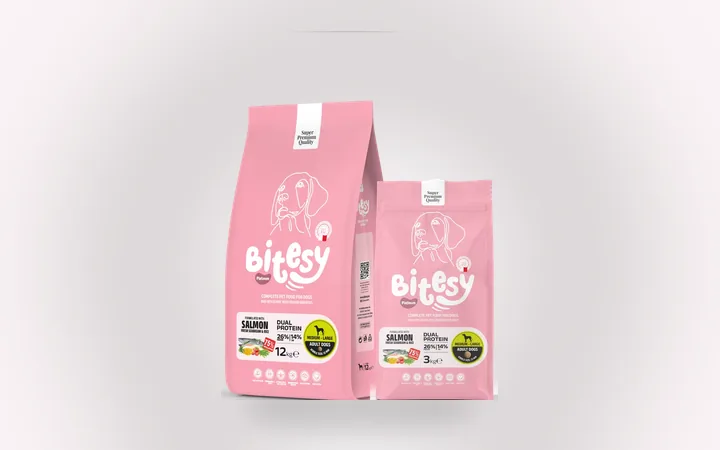
Best dog food for skin allergies? Why fish, seabream and salmon, is the place to start
Looking for the best dog food for skin allergies? Why fish-based dog food helps with itchy skin and dull coats: omega-3 from seabream and salmon, dual-protein recipes, and how Bitesy Platinum Dog uses fresh Mediterranean fish.