How much should I feed my kitten? A week-by-week guide from weaning to one year
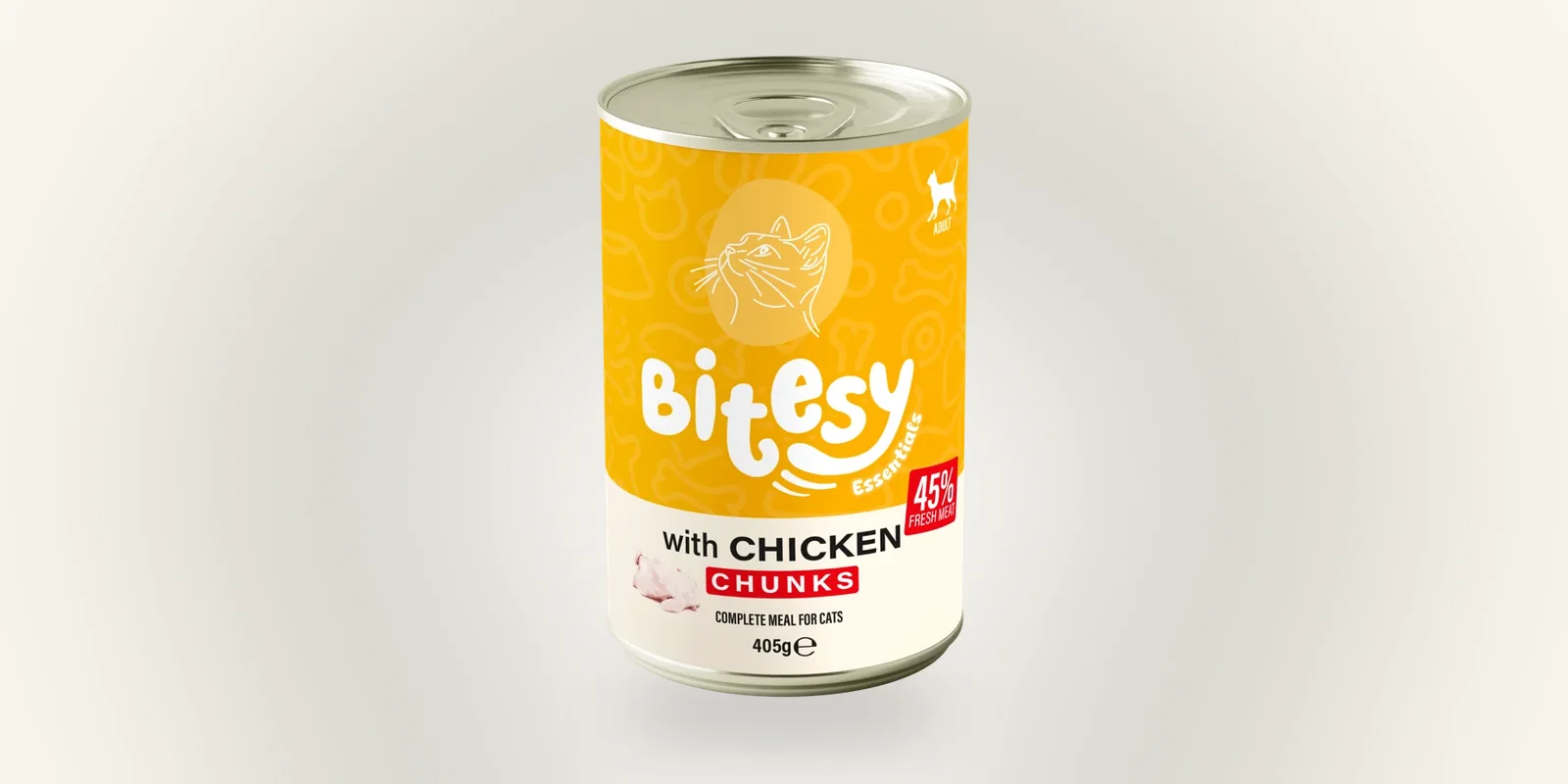
How much should I feed my kitten is the question every new owner asks in the first week, and the honest answer is "more than you think, more often than you think, and by weight rather than by eye". A kitten multiplies its birth weight many times over in its first year, and the food has to keep up.
Why kittens need a kitten food
Growth needs roughly twice the energy per kilogram of an adult cat, more protein, more fat, and higher levels of taurine, calcium and DHA for the eyes and brain. Adult food is not dangerous, but a kitten on it will grow more slowly and may fall short on the nutrients that matter most. Bitesy Essentials Cat wet food includes a chicken chunks recipe formulated for kittens, complete on its own, with taurine and vitamins A, D3 and E in every can.
Week by week
- Up to 8 weeks: mother's milk, then softened food from about four weeks. A smooth texture helps: the Bitesy Platinum kitten mousse is designed for weaning as a complementary food alongside the main kitten diet.
- 8 to 12 weeks: four small meals a day of a complete kitten food. Follow the feeding table on the pack for the kitten's current weight, and expect the amount to rise every week.
- 12 to 26 weeks: three meals a day. This is the fastest growth phase; a kitten that seems permanently hungry usually is.
- 6 to 12 months: two meals a day. Growth slows; watch for the moment the kitten starts leaving food, and stop increasing portions.
- 12 months: move to an adult complete food over a week. Large breeds such as Maine Coons keep growing until 15 to 18 months and can stay on kitten food longer.
Wet, dry or both
Wet food is the easier start: kittens accept it readily and it delivers the water they need. Many owners add a complete dry food from 12 weeks for convenience and dental variety. If you feed both, treat them as one ration and reduce the dry portion when you add a can.
Do's and don'ts
- Do weigh the kitten weekly and feed to the pack table for that weight.
- Don't give cow's milk; most kittens cannot digest lactose after weaning.
- Do keep fresh water available at all times, in more than one place.
- Don't free-feed a kitten that will be sterilised; the habit of grazing is what makes sterilised cats overweight.
- Do introduce any new food over five to seven days.
- Don't panic about a skipped meal, but see the vet if a kitten refuses food for more than a day or has diarrhoea for more than 24 hours.
Frequently asked
How many grams should a 12-week kitten eat?
It depends on weight and the food's energy; a typical 1.3 kg kitten eats around 200 to 250 g of complete wet food a day. Use the table on the pack rather than a generic figure.
Is the Platinum kitten mousse a complete food?
No. It is a complementary food, designed to be fed alongside a complete kitten diet such as the Essentials Cat kitten chunks, for weaning and as a treat.
When can a kitten eat adult food?
From about 12 months, or later for large breeds. Switch gradually over a week.
More from the blog

Is wet food better for cats? Wet vs dry, how to combine them, and why water is the real question
Is wet food better for cats than dry? A plain guide to what each does well, why hydration matters so much for cats, and how to mix wet and dry without overfeeding.
Mono-protein cat food: what it is, and which cats really need it
Mono-protein (single-protein) cat food explained: what it means, why it helps cats with food sensitivities and itchy skin, and how to use it in an elimination diet.

Best dog food for skin allergies? Why fish, seabream and salmon, is the place to start
Looking for the best dog food for skin allergies? Why fish-based dog food helps with itchy skin and dull coats: omega-3 from seabream and salmon, dual-protein recipes, and how Bitesy Platinum Dog uses fresh Mediterranean fish.