Best cat food for indoor cats: urinary health, sterilised cats and what the label should say
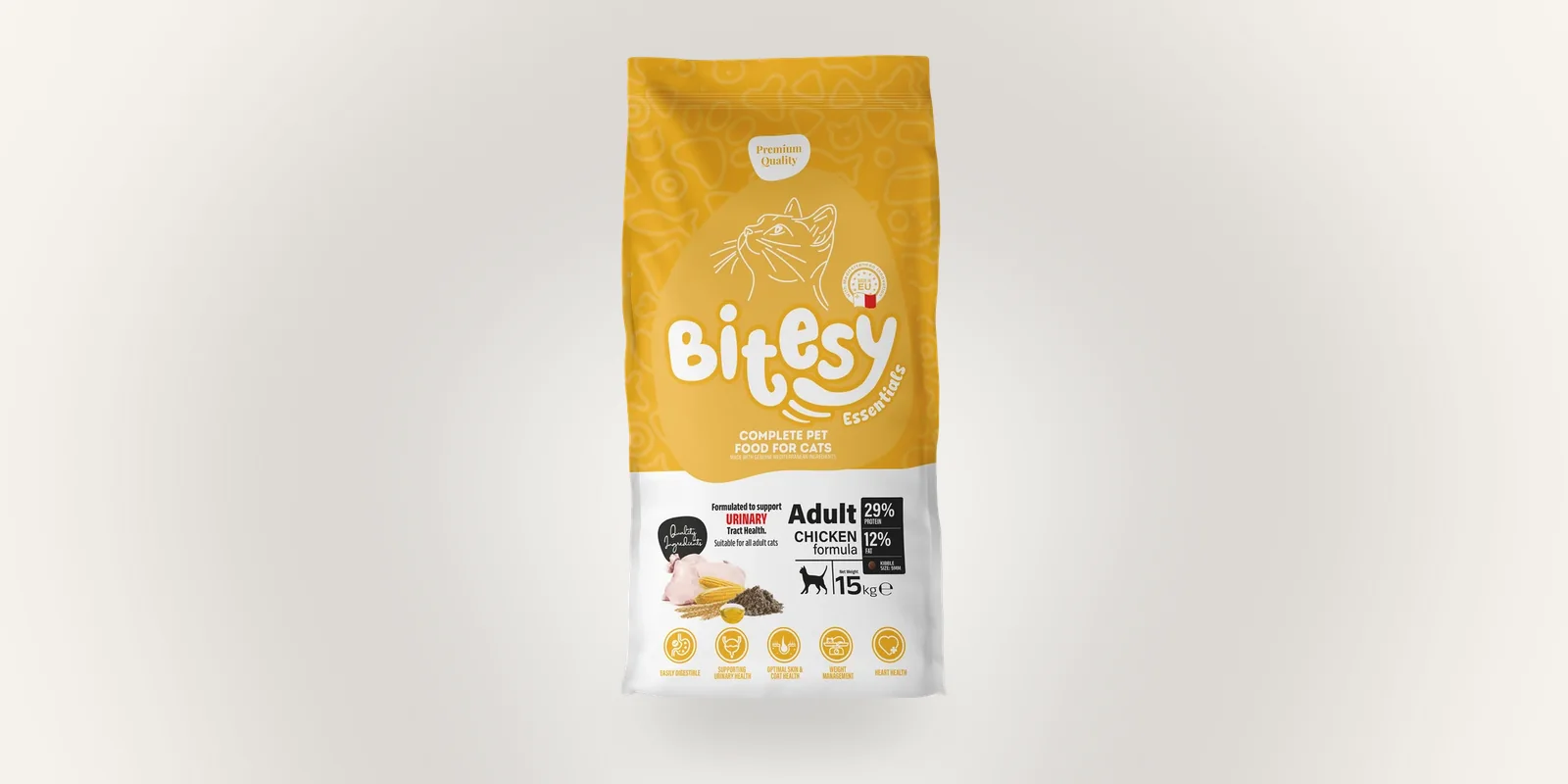
The best cat food for indoor cats is not a flavour, it is a set of numbers. Indoor cats move less, are usually sterilised, drink less than they should and live longer than their outdoor cousins. A dry food built for them controls fat, protects the urinary tract and delivers the nutrients cats cannot make themselves. Here is what to look for, and how the three Bitesy Essentials Cat recipes cover it.
Urinary health: the indoor cat's weak point
Concentrated urine and a sedentary life are the two main risk factors for the crystals and cystitis vets treat every week. A food can help by keeping the urinary pH in the right range and by encouraging water intake. The Essentials Cat chicken urinary formula is built for this: 35% chicken, including 5% fresh chicken hydrolysate for palatability, at 29% protein and 12% fat. Pair it with a wet food or a water fountain and you have covered the two biggest levers.
Sterilised cats: same appetite, fewer calories
Neutering lowers a cat's energy needs by around a quarter while leaving its appetite untouched, which is why so many sterilised cats are overweight by the age of three. The herring formula for sterilised cats answers this with 26.5% protein and 10.5% fat, so a normal-looking portion carries fewer calories, and with herring as a fish protein cats find easy to digest.
Eyes, digestion and the everyday recipe
For an indoor cat without specific issues, the chicken and fish formula is the all-rounder: 30% chicken and 4% fish, 27% protein, 10.5% fat, with taurine for the eyes and heart and beet pulp and carob for digestion. It is also the recipe to choose for a household with several cats of different ages.
Taurine, always
Every Bitesy Essentials Cat recipe is supplemented with taurine, the amino acid cats cannot make enough of and without which heart and eye disease follow. It is not optional in a complete cat food, and it is the first thing to check if you ever consider a food that is not labelled complete. There is a full article on taurine in cat food on this blog.
Do's and don'ts for indoor cats
- Do measure the daily amount; free-feeding is how indoor cats gain weight.
- Do add water to the diet: a can of Essentials Cat wet food a day, or a fountain.
- Don't give milk; most adult cats are lactose intolerant.
- Do use food to make the cat work: a puzzle feeder or a scattered portion turns eating into exercise.
- Don't ignore a cat that strains in the litter tray or visits it repeatedly; that is a same-day vet visit.
Frequently asked
Can an indoor cat eat the urinary formula every day?
Yes, it is a complete daily food. It is designed for adult cats prone to urinary issues but suits any healthy adult indoor cat.
Is the sterilised formula only for sterilised cats?
It is formulated for their lower energy needs, but any adult cat that tends to gain weight can be fed it.
How much should an indoor cat eat?
Use the feeding table on the bag for your cat's ideal weight, not its current weight, and adjust every few weeks by feel: you should be able to feel the ribs under a thin layer of fat.
More from the blog
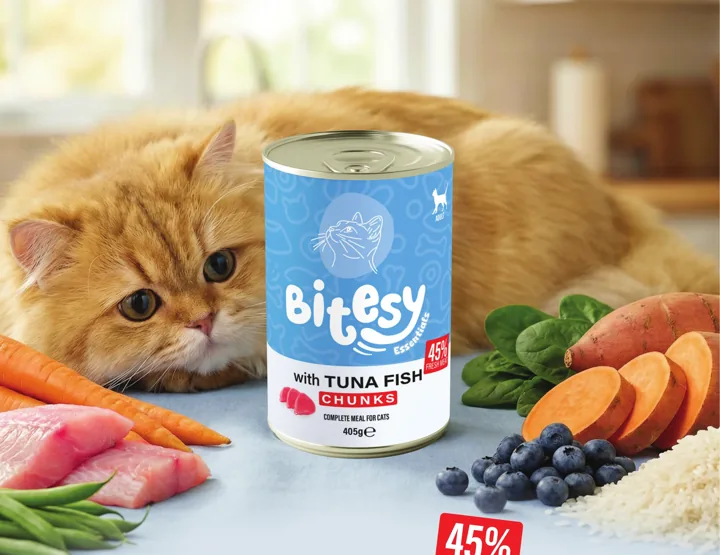
Is wet food better for cats? Wet vs dry, how to combine them, and why water is the real question
Is wet food better for cats than dry? A plain guide to what each does well, why hydration matters so much for cats, and how to mix wet and dry without overfeeding.
Mono-protein cat food: what it is, and which cats really need it
Mono-protein (single-protein) cat food explained: what it means, why it helps cats with food sensitivities and itchy skin, and how to use it in an elimination diet.

Best dog food for skin allergies? Why fish, seabream and salmon, is the place to start
Looking for the best dog food for skin allergies? Why fish-based dog food helps with itchy skin and dull coats: omega-3 from seabream and salmon, dual-protein recipes, and how Bitesy Platinum Dog uses fresh Mediterranean fish.